About
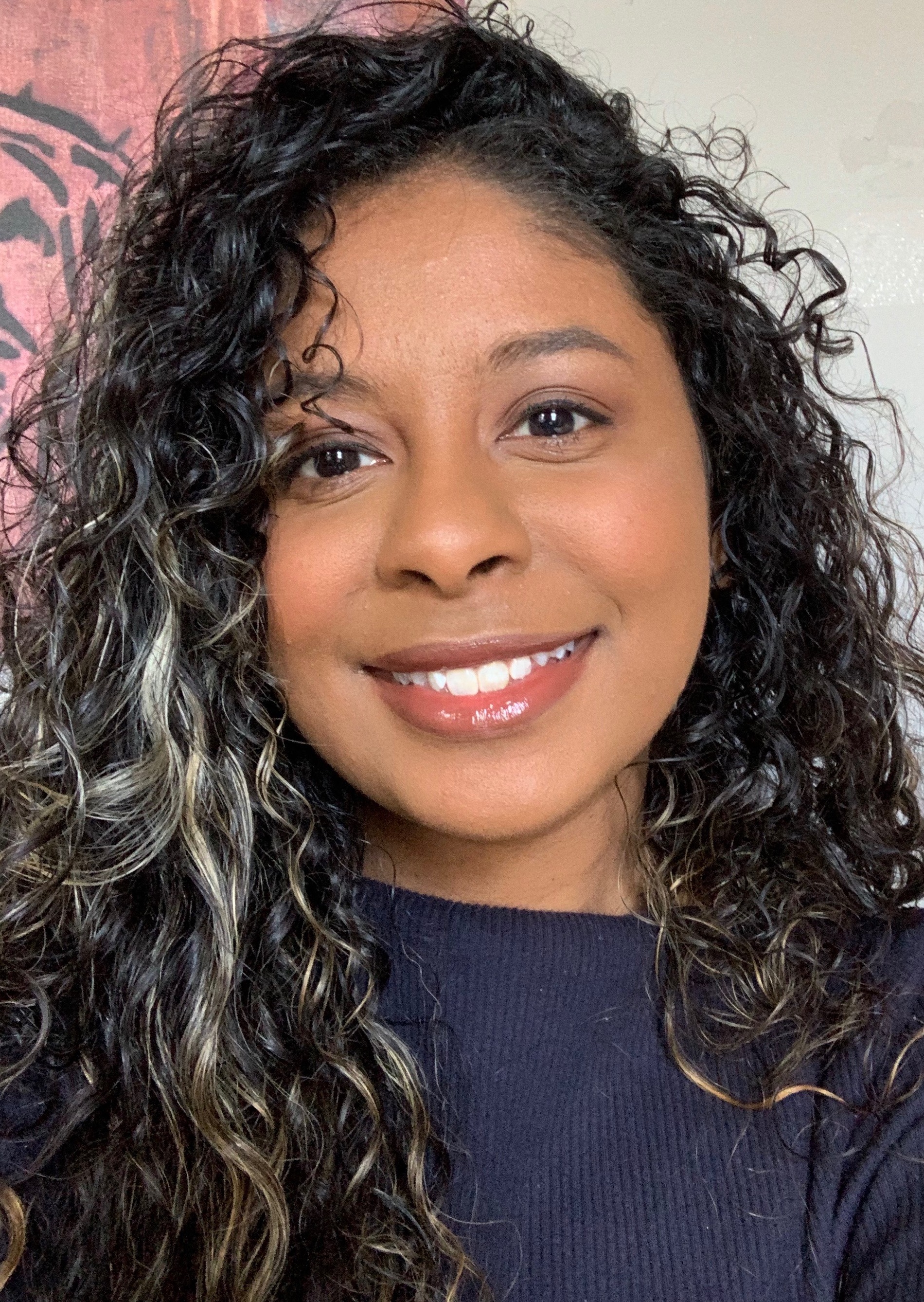
Hello! My name is Nicole Lalta. I'm currently a graduate student in the Behavioral and Neural science PhD program at Rutgers University-Newark.
I aspire to become a neuroscientist focused on understanding the underlying mechanisms of various mental health illnesses such as depression and schizophrenia, and the interventions that can be used.
Projects
Individualizing Repetitive Visual Stimulation using the Individual Alpha Frequency
February 2024 - Present
Recently, it has been discovered that flickering light induces long-term response changes in the visual cortex that are like those observed in long-term potentiation (LTP) after repetitive electrical stimulation in the hippocampus. This finding has sparked interest in the use of repetitive visual stimulation (RVS) for noninvasive neuromodulation. Because stimulation frequencies in the alpha band trigger the largest changes, we hypothesized that maximal gain changes could be produced by matching the RVS frequency to a participant’s individual alpha frequency (IAF). Using EEG, we first determined a participant’s IAF (the frequency between 8 to 12 Hz with maximum power during eyes-open resting state). For individual IAF values, our results revealed a significant relationship between the IAF calculated at the beginning of the first session and the second session. This reveals the stability of the IAF, which is supported by the literature. Behaviorally, after receiving RVS at their IAF, participants had reduced reaction time and a lower contrast detection threshold. Data collection is still ongoing, so further testing is needed to confirm the significance of these effects. If confirmed, then individualizing the frequency parameter for each participant may enhance the effects of RVS on the visual cortex.
See PosterReview & Meta-Analysis: Eye Movements in Schizophrenia
September 2022 - Present
Comprehensive review and meta-analysis on how different categories of eye movements are dysregulated in schizophrenia patients, and the potential of using a specific category of eye movements as a diagnostic tool for schizophrenia.
See PosterRecovery of reward function in nicotine use disorder using a combination of robotoics, electrophysiology, and TMS
January 2023 - December 2023
Collected 30 participants with nicotine use disorder for a 3-session study. Analyzed resting-state fMRI data for each participant for a personalized target to receive TMS. Compared effects of stimulation to three other fMRI targeting methods: diffusion-weighted imaging, cortical thickness, and task-based fMRI.
See PosterResting-State TMS Targeting
December 2021 - August 2022
Analyzed resting-state fMRI data of 30 participants using MATLAB, bash, and python scripting to create target regions for transcranial brain stimulation.
Cognitive Factors in Virus Transmission
July 2020 - September 2021
Assisted in the execution of research study about the cognitive traits that influence our behavior during the COVID-19 pandemic. Created a landing page for potential participants to read and sign up for the study. Marketed study to potential participants in the surrounding area and on online.
See projectThe Empowerment through Science & Technology Initiative (ESTI)
September 2019 - June 2022
Created a website for informative content on science, health, technology, and research studies. Maintained and updated website periodically with new information. Created and executed a monthly newsletter.
Understanding Learning-Dependent Changes in Functional Connectivity through fMRI and EEG
September 2017 - January 2019
As people learn over time, functional connectivity, or the communication between brain regions, can shift. In order to evaluate these changes in functional connectivity, our lab designed an experiment that utilized the functional magnetic resonance imaging (fMRI) and the electroencephalogram (EEG), which measure blood flow and electrical activity respectively. In this 8-hour experiment subjects gradually gain expertise in a novel multi-sensory logic task. After testing the stimuli and running a pilot study, we have run over 40 subjects. From these experiments, I studied the various components of fMRI and EEG data and how they are imperative to changes in functional connectivity. We expect the results to inform our understanding of how various brain regions interact and connections shift throughout the learning process.
See PosterValidation of Automated Artifact Removal Procedures in Dense-Array EEG
May 2017 - October 2017
The objective of this project was to implement and validate an automated ICA approach by using a MATLAB script that correlated the IC time courses and EOG channel time courses over different thresholds. The automated approach was validated by comparing the overlap with classifications of the same ICA decomposition made manually by two humans, and by visualizing the effects of automated removal in signals of interest (event-related potentials or ERPs).
See PosterPublications & Articles
- Lalta N (04/10). "Advanced Yet Primitive: Gender bias in neuroscience and beyond". Practically Scientific. https://pscientific.substack.com/p/advanced-yet-primitive-gender-bias?utm_source=substack&utm_medium=email
- Mill RD, Hamilton JL, Winfield EC, Lalta N, Chen RH, Cole MW (2022). "Network modeling of dynamic brain interactions predicts emergence of neural information that supports human cognitive behavior". PLOS Biology. doi:10.1101/2021.01.26.428276
2023
2022
Work Experience
Graduate Program in Neuroscience
The Center for Molecular & Behavioral Neuroscience
Rutgers University - Newark
PhD Candidate | September 2022 - May 2027 (Expected)
Coursework:
- Foundations of Neuroscience I, II, III
- Critical Thinking
- Cerebral Cortex
- Statistical Analysis in Psychology
Teaching Assistant Courses:
- Research Methods in Psychology
- General Psychology 2
- Statistical Methods in Psychology
The Baker Lab of Neuroimaging and Stimulation
The Center for Molecular & Behavioral Neuroscience
Rutgers University - Newark
Research Assistant | November 2021 - August 2022
- Set up, performed experimental tasks, and entered data on a clinical population for a study involving 85 participants.
- Collected transcranial brain stimulation (TMS), electroencephalogram (EEG), and functional magnetic resonance imaging (fMRI) data in studies involving 50+ participants.
- Surveyed potential participants for a study involving opiod users.
- Analyzed fMRI data for 30 participants that created regions in the human brain for TMS targeting.
The Cole Neurocognition Lab
The Center for Molecule & Behavioral Neuroscience
Rutgers University - Newark
Lab Manager | June 2021 - Present
- Assisted in development of data collection protocols and Institutional Review Board (IRB) packages.
- Created and organized social media accounts for outreach initative program.
- Developed and executed monthly newsletter for outreach initiative program.
- Managed financial documents for two R01 grants.
- Recruited and surveyed older adults for an fMRI study involving 60 participants. Presented health-related information to senior citizens and community members in the NJ area.
Research Project Assistant | September 2020 - May 2021
- Supervised online COVID-19 study, "Cognitive Factors in Virus Transmission".
- Managed lab supplies and invoices.
- Advertised various studies online and around the community using Facebook, Reddit, Twitter, and the SONA System.
Research Assistant | September 2017 - August 2020
- Preprocessed fMRI data using the Amarel interface.
- Executed and supervised outreach initiative program, the Empowerment through Science & Technology Initiative (ESTI).
- Studied and presented academic papers to lab members.
- Set up, performed experimental tasks, and entered data for a combined fMRI and EEG study involving 57 participants.
- Surveyed 60 participants for an fMRI study.
- Updated lab website with new features: a counter for the number of presentations, papers, and preprints completed by the lab, and a drop-down menu for presentations older than 2015.
Summer Research Assistant | May 2017 - August 2017
- Developed and executed study on automated artifact removal procedures in dense-array EEG funded by the Garden-State Louis Stokes' Alliance for Minority Participation through the National Science Foundation under the supervision of Dr. Ravi Mill and Dr. Michael Cole.
Neurology Partners of Hudson County PA
Bayonne, NJ
Technician | October 2017 - May 2018
- Conducted Transcranial Doppler (TCD) and Videonystagmography (VNG) exams on patients.
- Recorded and analyzed TCD and VNG data for physician.
The Biology Learning Center
Biology Department
Rutgers University, Newark, NJ
Student Lab Assistant | October 2015 - May 2017
- Maintained and organized experiment equipment and glassware for 60+ students per semester.
- Set up 8 student labs per semester.
- Assisted graduate students and instructed undergraduate students during labs.